
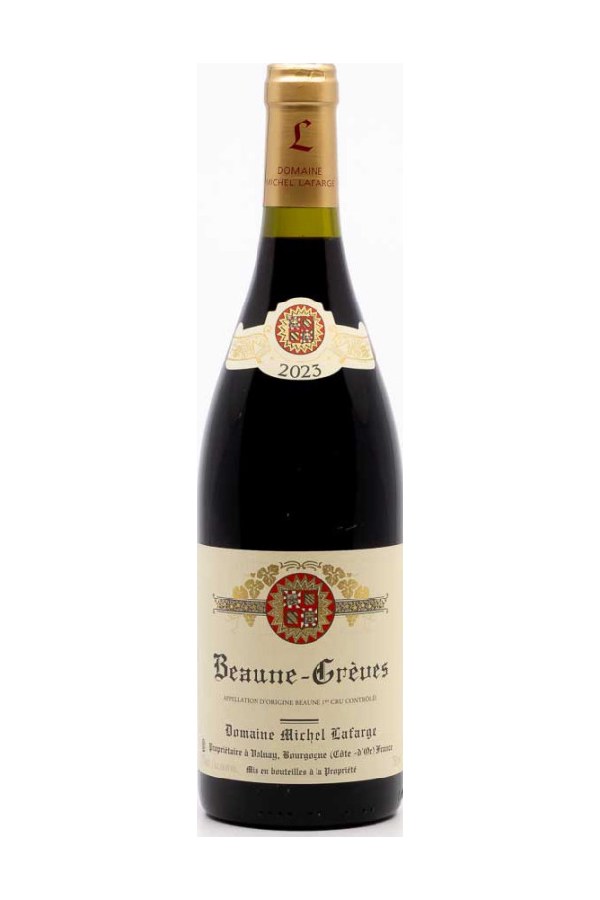
Domaine Michel Lafarge Beaune 1er Cru les Greves 2023
In the glass the wine reveals depth and energy its aromas unfurl in layers of black cherry, violet florals and damp earth with a whisper of pomegranate. The palate is structured and refined its texture firm yet vibrant with bramble fruit and a thread of dark plum. The finish echoes with mineral tension and supple tannins, promising a graceful evolution over time.
Tasting
- Aroma
- black cherry, violet, damp earth
- Palate
- structured bramble fruit with dark plum
- Finish
- mineral tension with supple tannins
Pairs with
- roasted duck breast
- pan‑seared pheasant
- wild mushroom risotto
- aged Comté cheese
Vineyard & Cellar
- Soil
- Because this vineyard is so large, the geology and soils are highly variable. The soil is moderately deep (50 cm), very gravelly, with significant amounts of silt and sand. There is very little clay with thick layers of poorly-sorted stones throughout. This texture makes for very light and dry soils
- Vinification
- 100% de-stemmed, indigenous yeast fermentation, pneumatic press. Aged for 18 months, unfiltered.
From the Archive
Terroir: Moderately steep slope facing directly east. Moderately deep, gravelly, light soils on limestone. 225 to 300-meters elevation.
Etymology: From the common Latin word GRAVA, meaning "crumbly stone, gravel, little stones, fine scree, sandy soil."
In Burgundy, vineyards named Grèves are generally scree-covered lands that are particularly suitable for growing vines.
Site: Les Grèves is one of the largest vineyards in Beaune, spanning most of the hill from top to bottom. The elevation ranges from 225 to 300 meters and measures well over half a kilometer across. The vineyard is located directly upslope, west of Beaune. The slope varies from steep at the top to nearly flat at the bottom. It faces directly east.
Geology and
Lafarge Parcel: The Lafarge parcel of Les Grèves stands out from the entire vineyard. This parcel is located in the northwest corner near the top of the slope at approximately 260-meters elevation. Small crumbling walls surround the vineyard on most sides, and although Frederic says that these small walls do not quite function exactly as a clos, they do help to stop the runoff from other vineyards, keeping his vines healthy. The vines within these small walls sit in a small concavity of the slope that looks like its own little nook, or cradle. Within this cradle are some of Lafarge’s oldest vines of Pinot Noir, with the oldest being up to 96 years old.